Data centres are under fire – but the industry is already changing how they are built
By Claire Keelan, UK Managing Director at Onnec
Spend five minutes on TikTok or Instagram and you will see the mood turning against data centres.
Posts warn about water use, energy demand and industrial buildings swallowing up green space. This sentiment is spilling into the real world too. Nearly 5,000 people have signed a petition opposing plans for a data centre near Norwich, while developments in Kent and north Devon have also faced vocal resistance. In Scotland, the SNP has backed calls for a temporary moratorium on AI data centre developments.
What this debate misses is that the very platforms carrying many of those objections are powered by data centres. So are the AI tools now used by 26.4 million people in the UK, the streaming services we watch, the banking apps we rely on and the cloud systems keeping businesses running.
That does not make concerns about data centres invalid. Communities deserve honest answers about land, energy and water. But the conversation has become lopsided. We talk endlessly about what data centres consume, while saying far less about what they enable.
The question is not whether we should build them. It is how we build them better.
demand is not going away
The UK is already struggling to build enough capacity to keep pace with demand.
Every AI prompt, card payment, video call and hospital record has to be processed somewhere. All of this relies on buildings, servers, cables, power and cooling – in other words, a data centre. As AI adoption grows, pressure on that infrastructure will only intensify.
Yet projects are already being slowed by constrained power supplies, planning delays, skills shortages, rising costs and stretched supply chains. Community opposition adds another hurdle just as the country needs to move faster.
Digital sovereignty is raising the stakes further. The EU’s Cloud and AI Development Act aims to expand regional cloud and data centre capacity, while the European Commission has awarded a contract worth up to €180 million for sovereign cloud services from European providers.
Onnec research found that 76% of UK data centre professionals see sovereign cloud as a significant opportunity for European operators over the next three years. For the UK, that is also a warning: if investment shifts towards the EU and US while Britain remains caught between rising demand and slow delivery, capacity, jobs and innovation will be built elsewhere.
look beyond the chatbot
Public debate around AI often begins and ends with chatbots and generated images. But some of its most valuable applications are happening far from the spotlight.
Researchers are using AI to analyse medical data and identify potential treatments for diseases like Parkinsons that have resisted conventional approaches. Humanitarian organisations are using AI Agents to process fragmented information during conflicts and natural disasters, helping aid workers make faster, better-informed decisions.
A data centre is not the breakthrough itself. It is not a new medicine, faster crisis response or a scientific discovery. It is the infrastructure that makes those things possible.
BUILD RESPONSIBLY, NOT BLINDLY
Saying data centres matter does not give the industry a free pass.
Energy use matters. Water use matters. Location matters. So does the impact on local communities. But this cannot become a choice between building without restraint and not building at all. The more useful question is what responsible development looks like.
Technology is already helping operators reduce the resources facilities require. Closed-loop systems recirculate water, while direct-to-chip and immersion cooling can remove heat more efficiently and reduce reliance on water-intensive evaporative systems.
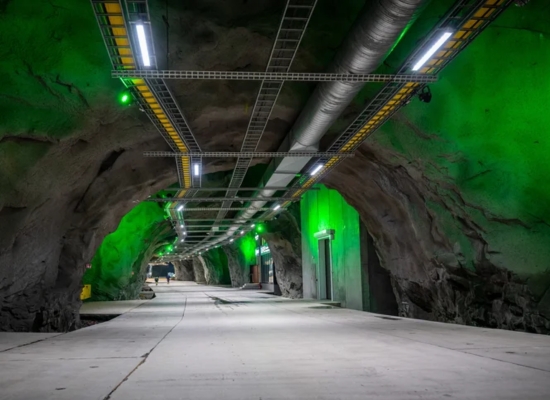
The most forward-looking facilities combine these technologies with renewable energy and designs tailored to their surroundings. In Norway, cold fjord water is used for cooling and hydropower supplies the electricity. In Iceland, geothermal energy, hydropower and naturally low temperatures reduce reliance on conventional cooling systems.
The heat generated inside data centres is also being put to use elsewhere: feeding district heating networks and homes across the Nordics, heating the Olympic swimming pool in Paris and even regulating water temperatures in trout and lobster farms.
That thinking can extend beyond the plant room. At Brent Cross, Pure Data Centres is building a 7,400-square-metre living wall showing how facilities can fit more positively into their surroundings.
No single innovation will solve the industry’s environmental challenges. Together, however, these examples show that digital growth and more sustainable design do not have to pull in opposite directions.

The infrastructure behind the ambition
The UK has no shortage of AI ambition, with the government pushing AI Growth Zones and broader AI Opportunities Action Plan. The harder question is whether it is prepared to build the infrastructure that ambition requires.
Doing so will take more than efficient servers and sustainability targets. Building and upgrading these facilities responsibly requires specialist expertise from the outset: understanding the whole environment, identifying constraints early and coordinating complex work without compromising safety, efficiency or uptime.
The UK cannot embrace AI in theory while rejecting the infrastructure behind it in practice. There is no AI at scale without data centres. So, let’s stop asking whether we need them and focus instead on how we build them better.