The backbone of AI-powered pharma: The critical role of network infrastructure
Walk into most pharma boardrooms today, and AI is likely to be high on the agenda. From smart manufacturing and digital twins to predictive maintenance and connected laboratories, AI is moving beyond pilot projects and into everyday operations.
But every one of these applications depends on something less visible: the physical network infrastructure that moves data reliably, securely and in a form that stands up to audit.
Much of pharma’s cabling infrastructure was installed 10, 15 or even 20 years ago, when bandwidth demands were far lower and connectivity was less complex. Today, data flows continuously across R&D, laboratories, manufacturing, quality control, logistics and external partners. The demands on the network have changed, and the infrastructure must change with them.
High-performance cabling is no longer just a background utility. It is a critical part of the foundation for AI in pharma, supporting data integrity, operational resilience, compliance and the ability to keep critical environments running.
Why cabling matters in pharma
Modern pharmaceutical operations rely on data moving reliably and securely between connected systems. AI-driven research, digital twins, real-time manufacturing monitoring and digital batch records all depend on consistent, high-performing connectivity.
In regulated environments, the requirements extend beyond performance. Infrastructure must also be properly documented, traceable and capable of supporting audit requirements. Undocumented cable runs, unclear labelling or poorly recorded changes can create unnecessary challenges when demonstrating control over the systems supporting critical operations.
At the same time, upgrading infrastructure in live pharmaceutical environments presents its own challenges. Laboratories, manufacturing lines and supply chains cannot simply stop while networks are redesigned.
The answer is not necessarily to replace everything. It is to understand what is in place, identify the risks and plan improvements around future requirements.
Five practical steps to future-ready pharma infrastructure
1. Audit your existing infrastructure
Start by building a clear picture of your current network estate across laboratories, manufacturing sites, data centres and distribution hubs. Include connections to external partners, such as contract research organisations (CROs) and contract development and manufacturing organisations (CDMOs). Identify gaps between what is installed and what is assumed to be in place.
2. Plan for future workloads
Assess whether your infrastructure can support emerging requirements, including AI applications, IoT devices, smart manufacturing, cloud platforms and connected laboratory environments. Planning around future workloads, rather than current demand alone, can help reduce the risk of costly upgrades later.
3. Review documentation and auditability
Ensure cable runs, patch panels and connection points are clearly labelled and documented. Review network resilience, redundancy and segmentation alongside change management processes. Accurate records help teams maintain control of the infrastructure and provide a clearer audit trail when required.
4. Upgrade around live operations
Infrastructure improvements need to work around the realities of pharmaceutical environments. Plan upgrades in carefully sequenced stages to minimise disruption to laboratories, production lines and supply chains. A phased approach can help modernise connectivity while keeping critical operations running.
5. Work with experienced infrastructure partners
Choose partners who understand the demands of regulated environments and the importance of traceability, documentation and controlled change. Building these requirements into design, installation and ongoing support helps ensure compliance considerations are addressed throughout the project, rather than retrospectively.
Build the foundations for what comes next
As pharma becomes more connected and data-driven, network infrastructure needs to be treated as a strategic asset, not simply an installation requirement.
Taking a proactive approach can help organisations reduce operational risk, support evolving technology requirements and avoid the disruption associated with reactive upgrades. Most importantly, it provides a stronger foundation for the digital transformation initiatives that depend on reliable, secure and auditable data movement.
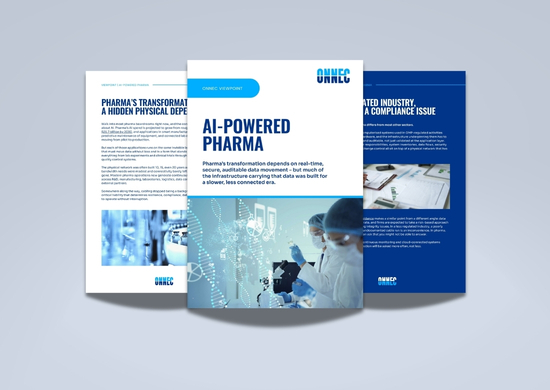
Discover more in our latest Onnec Viewpoint
Read the full viewpoint: AI-Powered Pharma to explore the challenges facing pharma infrastructure and the steps organisations can take to prepare for the next phase of digital transformation.