Stop Building, Start Upgrading: How Smart Retrofitting Can Help Win the AI Infrastructure Race
Adrian Hill, Onnec Ireland Managing Director
Demand for AI infrastructure is accelerating fast. Global data centre capacity is expected to nearly double by 2030, yet new facilities are increasingly slowed by grid constraints, planning timelines and supply chain delays.
That reality is pushing operators to look inward, not just outward. Many existing data centres, originally designed for lower-density enterprise or cloud workloads, still have untapped potential if they can be upgraded for modern infrastructure demands.
Smart retrofitting offers a practical way to unlock that capacity. By modernising power, cooling and network infrastructure, operators can increase density, extend the life of existing buildings and bring new capability online faster, without the long lead times associated with new builds. But retrofitting is more than replacing ageing equipment; it requires a holistic approach that rethinks infrastructure and carefully sequences upgrades to meet modern workloads without compromising uptime or service-level agreements.
Retrofitting is a strategic imperative
Speed-to-market has become a critical differentiator for operators. In the UK, total data centre capacity in 2024 is estimated at 1.6GW, yet AI and high-performance computing demand is projected to triple by 2030. Operators can’t rely solely on new builds to meet this surge: constructing a new site can take four years or more, and costs continue to rise sharply.
Construction costs are also rising sharply. Global data centre construction inflation averaged around 5.5 % in 2025, with some operators reporting annual increases of 6-15%, adding further pressure to project timelines and budgets.
Retrofitting existing facilities provides a faster, more flexible alternative. Phased upgrades can deliver additional capacity in months rather than years, enabling operators to respond to demand spikes while maintaining live operations. However, retrofitting is far from a simple hardware swap. Many older sites were designed for air cooling and classic cloud workloads of 5–10kW per rack, while modern AI clusters may demand 30-80kW or more. Delivering these density gains safely requires careful consideration of structural limits, power availability, cooling capacity, and operational constraints. Early evaluation ensures upgrades are technically feasible, aligned with business goals, and deliver long-term value.
Future-ready retrofitting principles
Successful retrofits require a coordinated approach across five areas:
- Retrofit suitability – assessing structural and power limitations to determine what is feasible before committing to upgrades. Older buildings may have physical or electrical constraints that can’t be altered, and realistic planning must account for those limits.
- Hardware upgrades – targeted improvements such as containment, rear-door heat exchangers, or modular cooling systems can support higher densities without requiring a full rebuild. The key is ensuring the upgrades are scalable for future workloads.
- Network readiness – AI workloads can easily expose network bottlenecks. Structured, high-density fibre pathways with capacity for growth prevent disruptive re-cabling and support east-west traffic surges.
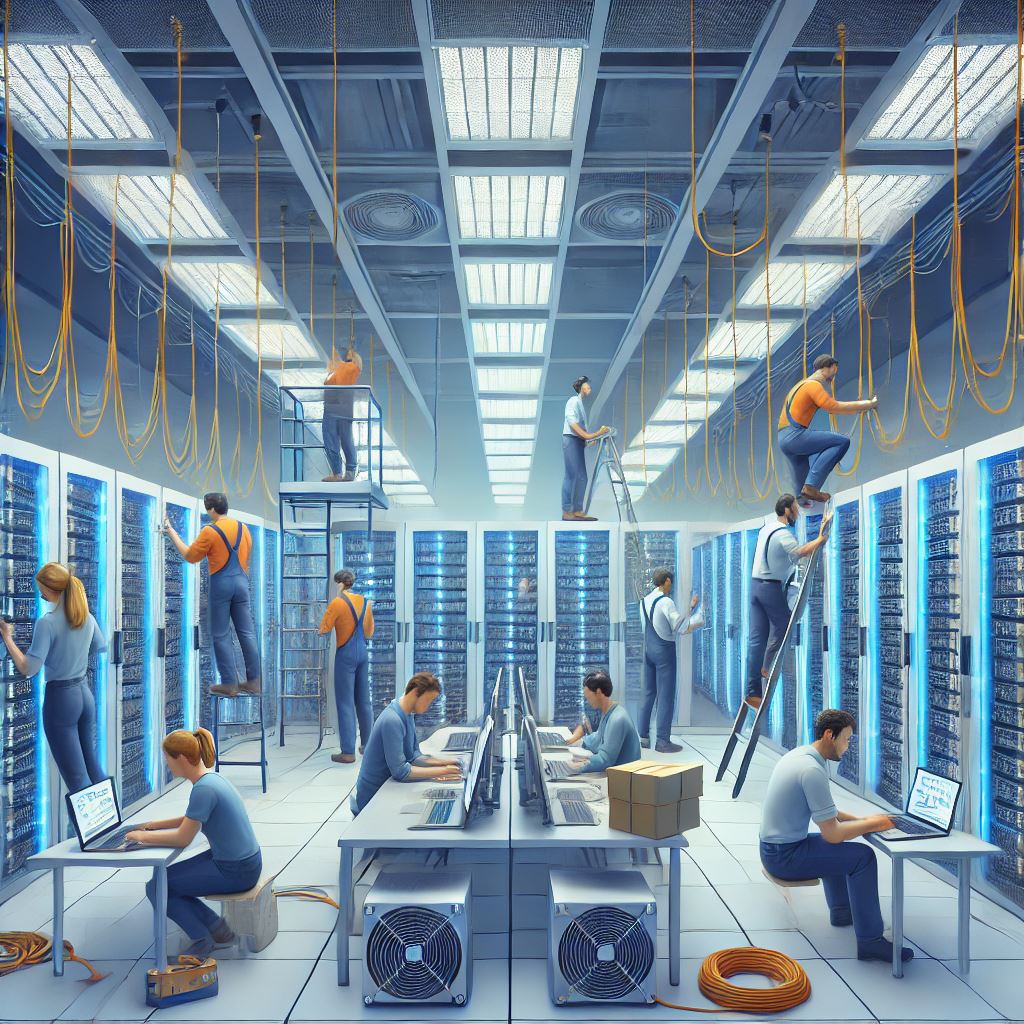
- Phased reworks – live facilities require careful sequencing of work, often aisle by aisle or zone by zone. This protects ongoing operations and mitigates downtime risk.
- Supply chain visibility – long-lead items, including high-density fibre assemblies or specialist power components, must be ordered in advance to avoid delays that could undermine the retrofit schedule.
Integrating these principles ensures retrofits meet current performance requirements while laying the foundation for future upgrades, reducing risk, and maximising operational efficiency.
Execution, phasing and future-ready design
Retrofitting a live facility requires disciplined planning, coordinated execution, and flexible design. Power, cooling, cabling, and network pathways must be carefully aligned, while upgrades are phased to protect ongoing workloads and service-level agreements. Phased commissioning, robust testing, and rollback procedures validate performance and resilience before high-density workloads are introduced.
Forward-looking design is central to future readiness. Flexible layouts, scalable cooling, and structured cabling allow facilities to evolve without major disruption. Combined with disciplined execution, these elements enable retrofits to deliver AI-ready capacity more quickly, sustainably, and with minimal operational risk.
This approach also gives operators agility. Facilities can adapt to shifting market demands, regulatory changes, or evolving customer requirements, remaining competitive and resilient over the long term. Retrofitted buildings thus provide value far beyond the immediate upgrade, establishing a platform for continuous growth and innovation.
Retrofitting as a strategic advantage
Smart retrofitting is more than a stopgap; it is a strategic opportunity. By taking a holistic, coordinated approach, operators can extend the life of existing buildings, unlock additional capacity, accelerate deployment, and improve sustainability.
In a market where speed, resilience and flexibility define competitive advantage, retrofitting can turn existing constraints into long-term operational strength. Thoughtfully upgraded facilities can scale with evolving workloads, maintain uptime, and support future technologies. By embedding adaptability into existing assets, operators not only meet today’s AI and high-density demands but also create a platform for innovation, turning legacy sites into strategic, future-ready data centre assets.
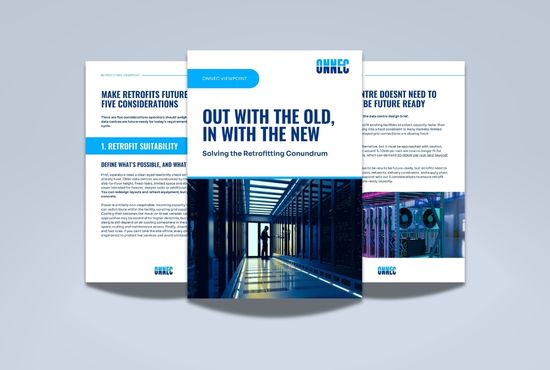
Read more in our Viewpoint – Out with the Old, in with the New: Solving the Retrofitting Conundrum