Building on Strong Foundations: Why Cabling Is Powering the Future of UK and Irish Retail
Walk into a modern retail store today and the experience is no longer purely physical. Customers browse via apps while in-store, complete purchases on mobile devices, and use self-service kiosks to return items. Behind the scenes, automation and cloud-based systems are quietly reshaping how stores operate.
Across both the UK and Ireland, this shift towards the connected store is accelerating, but not in a uniform way. While some locations prioritise experience-led innovation, others – including many smaller or more distributed stores – are focused on efficiency, convenience and return on investment.
That balance is becoming harder to strike. In Ireland, strong demand for digital commerce is clear, but research shows many businesses – especially SMEs – are still grappling with the cost of investment and limited in-house expertise needed to scale digital capabilities.
Despite this, both markets are converging on the same challenge: how to support increasingly connected, data-driven environments while closing the gap between online, in-store, stock and warehousing systems. Although 42% of UK retailers have restructured to better align these functions, more than half still struggle to fully connect them.
The reason is simple. As more technologies are layered into stores, the demand on networks and the physical foundations beneath them rises sharply. The network can no longer be treated as a background utility. Performance increasingly comes down to getting both the digital and cabling infrastructure right.
To do this effectively, there are five key factors retailers must consider when designing and upgrading their network infrastructure:
1. From store network to digital infrastructure platform
Historically, retail networks have been designed to support a limited number of fixed endpoints: tills, back-office systems and basic connectivity. But today, it underpins an entire ecosystem of technologies that directly influence revenue, efficiency and customer experience.
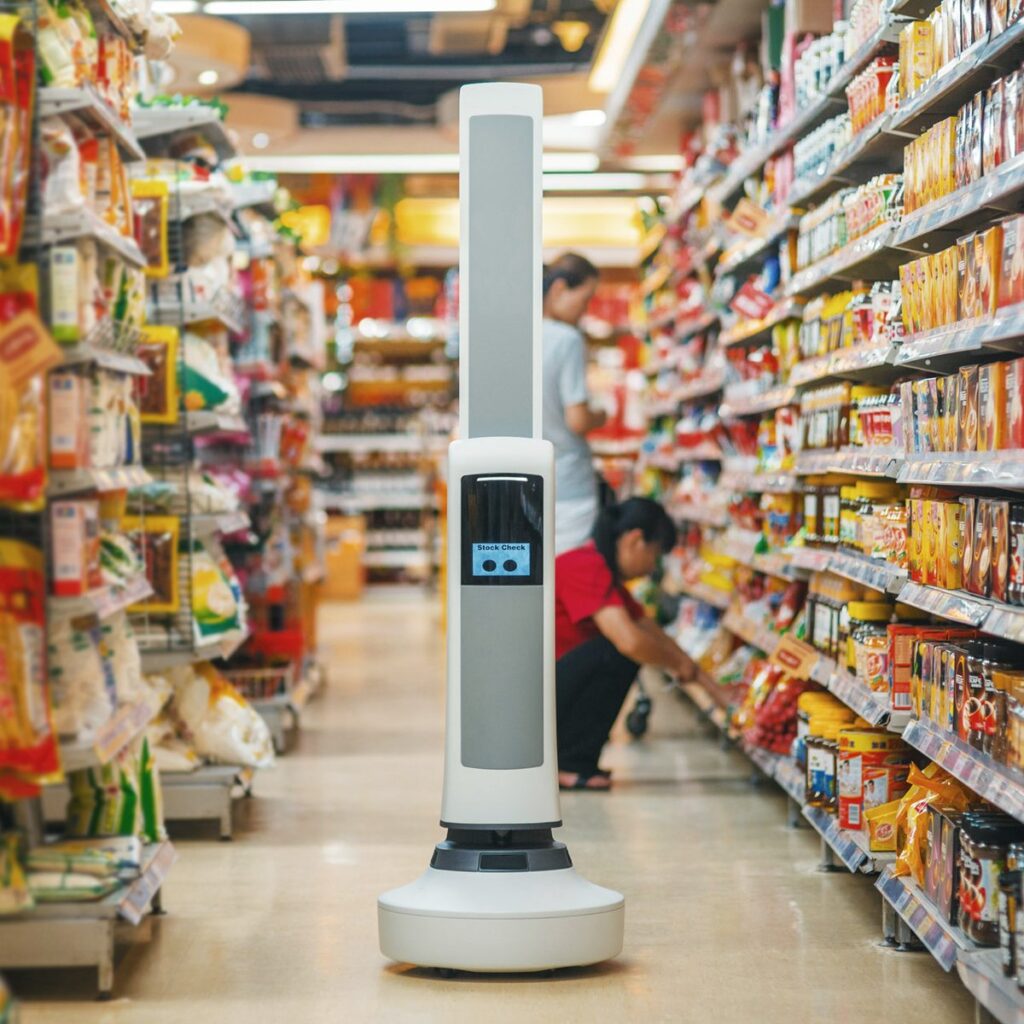
For instance, SuperValu’s pilot of Simbe’s “Tally” shelf-scanning robot improves inventory accuracy while reducing manual workload, while retailers like Zara are investing in increasingly tech-enabled store environments.
At the heart of this shift is the in‑store network itself—and its role has fundamentally changed. No longer a supporting utility, it is now core to business operations and must be resilient, scalable, and able to support continuous change. This shift starts with the network architecture itself. Modern retail networks must be resilient, scalable and designed to support constant change, integrating security, segmentation and centralised visibility to ensure new technologies can be added and managed without disrupting operations.
2. Wi-Fi as a critical layer of customer experience
Wi-Fi now plays a central role in how customers interact with retail environments, enabling mobile payments, loyalty apps and seamless omnichannel journeys.
It also powers digital signage and in-store displays – the screens pushing offers, seasonal campaigns or personalised messaging as customers move through the store. When it works, it feels seamless. When it doesn’t, it’s obvious. And all of it relies on fast, reliable connectivity behind the scenes.
In high-footfall UK retailers are investing in dense, high-performance wireless networks to support large volumes of connected users. In Ireland, where stores are smaller and more convenience-led, the focus is on enabling fast, reliable interactions – from click-and-collect to app-based promotions.
In both contexts, performance depends on what sits beneath. Without a well-designed and strong underlying cabling and wireless network architecture, including appropriate access-point density, intelligent traffic management, and a resilient backhaul, Wi-Fi cannot scale to meet demand. The result is familiar: slow payment processing at peak times, app failures mid-transaction, or customers abandoning digital journeys altogether – all of which directly impact revenue and experience.
3. Always-on checkout and POS modernisation
Nowhere is this reliance on infrastructure more visible than at checkout. Checkout is the most revenue-critical point in the retail journey, and it is becoming increasingly distributed. Cloud-based POS systems, mobile checkout and self-service technologies are transforming how and where transactions take place.
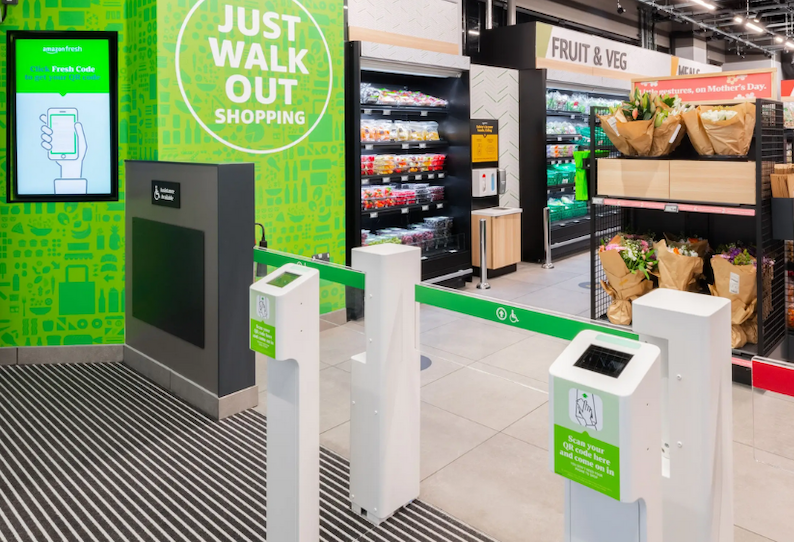
Autonomous retail concepts – such as The Galmont Hotel & Spa in Galway – offer a glimpse into cashier-less environments powered by computer vision and automated payments. While similar models, including Amazon Fresh in London, have faced setbacks, they still point towards a more frictionless future for checkout.
Across both the UK and Ireland, self-checkout and mobile POS are the standard in many shops. These systems improve speed and flexibility but also increase dependence on network performance. Even brief connectivity issues from underlying infrastructure can lead to delayed transactions, lost sales and poor customer experiences.
This makes low-latency, highly available networks with built-in resilience essential to maintaining performance at the most critical moment in the customer journey.
4. The rise of IoT-enabled stores
Retail environments are becoming increasingly connected, with a growing number of devices generating data and automating operations. This includes RFID systems, digital signage, security cameras, environmental sensors and robotics.
In Ireland, this trend is closely tied to efficiency and sustainability. Lidl’s net-zero supermarket in Maynooth, for example, uses connected sensors to monitor and optimise energy consumption. These environments depend on reliable infrastructure to collect and act on data in real-time.
At the same time, global innovation – from AI-driven personalisation to smart carts – is raising expectations for what connected stores can deliver. Even where these technologies are not yet widespread, networks must be designed to support future adoption.
Each of these adds not just capability, but complexity – placing greater strain on the underlying infrastructure.
As device density increases, so too does the need for high-performance cabling and integrated power delivery, with technologies such as Power over Ethernet playing an increasingly important role.
5. Simplified, centralised network management at scale
As store environments become more complex, managing network infrastructure across distributed estates is a growing challenge.
This is particularly relevant in Ireland, where retail is geographically dispersed across multiple towns and cities. Unlike highly concentrated retail hubs in the UK, investment is less about flagship impact and more about consistency and operational efficiency across locations.
Retailers are responding by adopting centralised, software-defined approaches. SD-WAN and cloud-managed networking enable remote monitoring, faster troubleshooting and more consistent performance, reducing reliance on on-site expertise.
Standardisation is equally important. Consistent cabling architecture across store estates allows retailers to roll out new technologies more quickly, simplify maintenance, and ensure predictable performance – all critical when scaling across hundreds of locations.
Infrastructure as the enabler of retail innovation
While the pace and visibility of transformation may differ between organisations, the direction of travel is clear. Retail is becoming more connected, more data-driven and more dependent on digital infrastructure to operate effectively and deliver competitive customer experiences.
But building that foundation is not just a technology decision – it is an execution challenge. Networks must be designed, deployed and managed in a way that reflects the realities of modern retail: distributed locations, evolving technologies and constant pressure on performance.
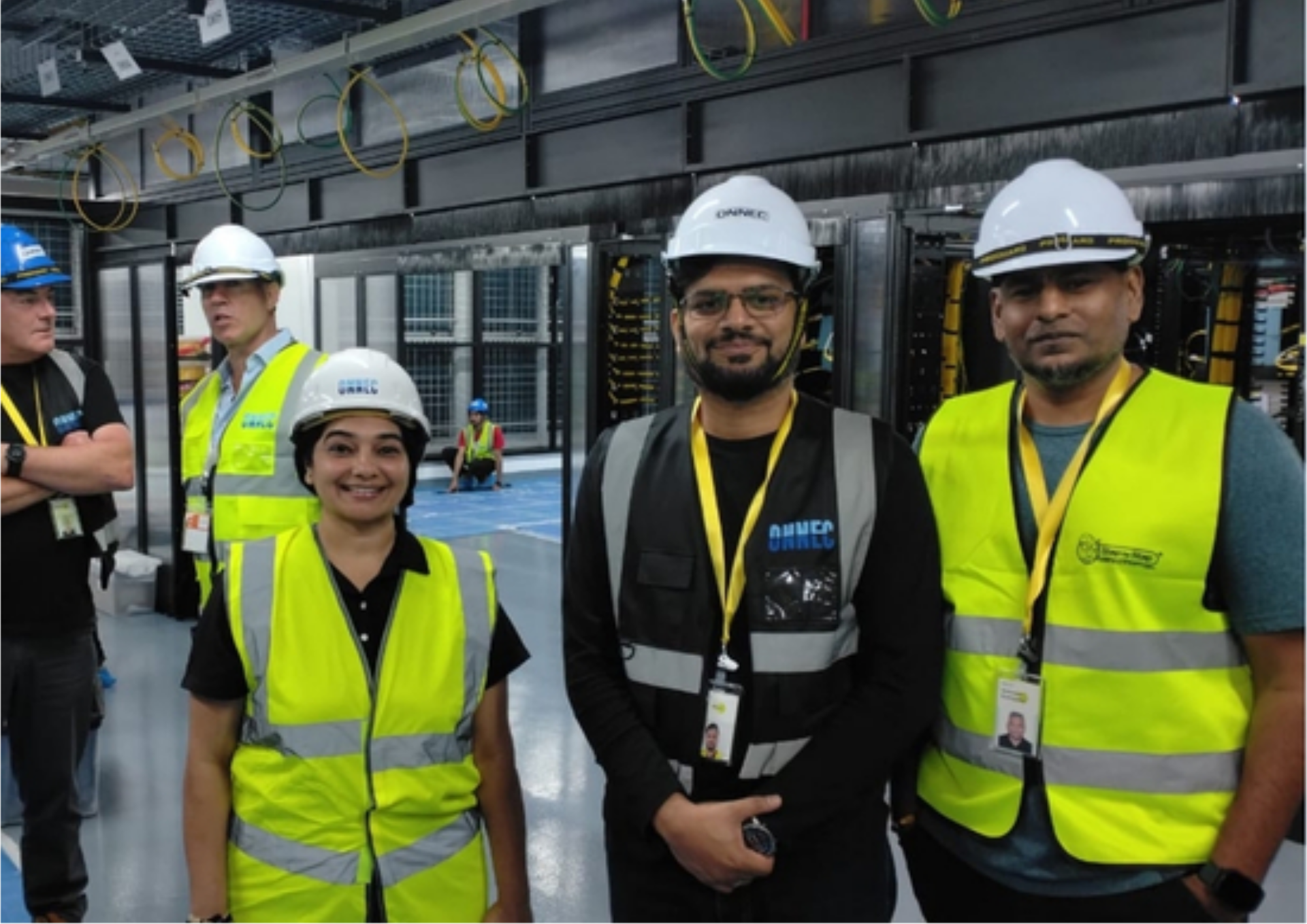
This is where experienced partners become critical. Expert partners like Onnec play a key role in helping retailers design and deliver the physical and digital infrastructure required to support connected store environments – ensuring networks are not only fit for today, but ready to scale with future demands.
Ultimately, the retailers best positioned for success will be those that recognise every connected experience, no matter how visible, depends on the strength of the infrastructure beneath it – from the network layer down to the cabling that supports it. In an increasingly connected retail environment, getting the physical foundations right is what enables everything else to scale.